I am delighted to share that Nature Astronomy commissioned and published a Comment piece about ‘Earth, a Cosmic Spectacle’ and my residency at the Institute of Astronomy, University of Cambridge.on 16 November, 2026.
Open Access Link - Earth, a Cosmic Spectacle in Nature Astronomy
”The Institute of Astronomy’s (IoA) Artist in Residence, Louise Beer, explores how our relationship with the night sky may shape the way that we value life on Earth, and how we individually and collectively understand the significance of the climate crisis through her multi-chapter project Earth, a Cosmic Spectacle. As light pollution and satellites are diminishing the view of the Universe for large parts of humanity, Louise and astronomers at the IoA reflect on how dark and clear night skies have affected them, and how losing a cosmic and deep-time context for life on Earth might influence how we value the living world.”
Lead author
Louise Beer
Co-authors
Dr Matthew Bothwell
Dr Anik Halder
Dr Charlotte Simmonds
The article was published on 16 November 2026.
Invitation to participate
Readers and the wider public are invited to send in a letter to the University of Cambridge for the archive of Earth, a Cosmic Spectacle.
Here is your question: “How does your knowledge of the scales of time and the ∼13.8-billion-year concatenation of astronomical and Earth-based events required to create Earth and all its biodiversity, help to shape your understanding of the significance of the climate crisis?”
Please send your postcard to:
Earth, a Cosmic Spectacle
Institute of Astronomy
Madingley Road
Cambridge
CB3 0HA
England
If you have any questions about this, please feel free to email me on the address below:
louise.j.beer@gmail.com
Earth, a Cosmic Spectacle Archive of Reflections
“Nature Astronomy publishes research, reviews and commentary at the cutting edge of astronomy, astrophysics and planetary science. Aiming to promote closer interaction between diverse astronomy-relevant disciplines, we consult widely with researchers at all stages of their careers, and more than one third of our commissioned authors are women.
Astronomy is arguably the oldest science, and has featured strongly throughout the history of Nature — the first quasar, the first exoplanet, the nature of spiral nebulae, to name but a few of the advances reported in its pages. The launch of Nature Astronomy now enables much expanded coverage of the modern discipline: the journal welcomes research across astronomy, astrophysics and planetary science, with the aim of fostering closer interaction between the researchers in each of these areas.
Like all Nature-branded journals, Nature Astronomy is characterized by a dedicated team of professional editors, a fair and rigorous peer-review process, high standards of copy-editing and production, swift publication and editorial independence.
In addition to publishing original research, Nature Astronomy publishes Comments, Reviews, News and Views, Features and Correspondence from across the full range of disciplines concerned with astronomy, as well as from a full range of voices.”
“The Institute of Astronomy, University of Cambridge is engaged in teaching and research in the fields of theoretical and observational Astronomy. A wide class of theoretical and observational problems are studied, ranging from the study and observations of extrasolar planets to supermassive black holes and quasars and of the evolution of the whole Universe, through theories and observations of the formation and evolution of galaxies and stars, X-ray sources and black holes.
Much observational work centres around the use by staff of large telescopes abroad and in space to study quasars, galaxies and the chemical constitution of stars. Instrumentation development is also an important area of activity, involving charge coupled devices and detector arrays for rapid recording of very faint light and the design and construction of novel spectrographs.”
“The Department of Astronomy, Universidad de Chile has played a key role in attracting foreign astronomical investment to the north of Chile: from the agreements signed in the 1960s for the installation of the Cerro Tololo and Cerro Las Campanas observatories, to the agreement for the installation of the ALMA radio observatory. (Atacama Large Millimeter / submillimeter Array) located in the Chajnantor plain in the vicinity of San Pedro de Atacama.
The Tokyo Atacama Observatory (TAO), Large Synoptic Survey Telescope (LSST), and Cornell Caltech Atacama Telescope (CCAT) will also be installed in Chile thanks to collaboration agreements managed by the University of Chile, ensuring Chile world leadership in capacity observation for the next 20 years.
The DAS maintains the historical telescopes of the OAN, including an Astrolabe and a Meridian Circle, in operating conditions; a German Heyde refractor telescope, which has been in the OAN since 1913 and the French Gautier telescope, arrived in Chile in 1893.
Since 2002 we have a modern 45cm Cassegrain telescope with CCD cameras, a spectrometer and an astronomical video camera, allowing the training of undergraduate and graduate students in Astronomy. This has allowed us to enhance our scientific dissemination program through guided visits of institutions and individuals, contributing to the teaching of this wonderful science.”
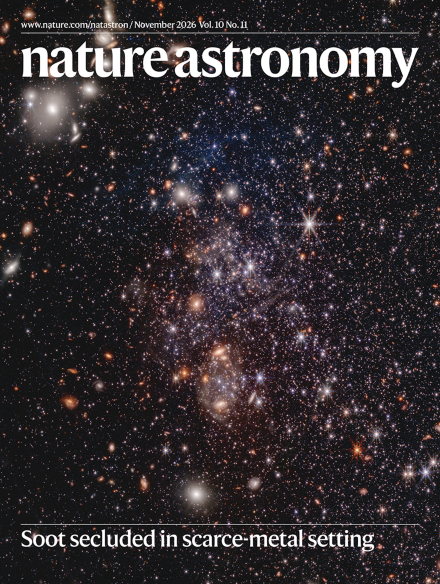
Image: NASA, ESA, CSA, Elizabeth Tarantino (STScI), Martha Boyer (STScI), Julia Roman-Duval (STScI); Image processing: Alyssa Pagan (STScI). Cover design: Bethany Vukomanovic