
I am delighted to share that I have been selected for the Delfina Foundation x Gaia Art Foundation UK Associateship - science_technology_society. This 3 month residency will give me the opportunity to extend my research into the impact of light pollution on the biological world, and how it changes our view of our place within the universe. I will be working with two other wonderful artists, Sonya Dyer and Anna Ridler. The residency runs from October - December. You can read see my profile here and read about the programme here. Towards the end of the residency I will be presenting an event at the Delfina Foundation, which I will share closer to the time.


Pale Blue Dot Collective Residency at The Arts Centre Te Matatiki Toi Ora in Christchurch
From 17 - 27 September 2020 Pale Blue Dot Collective will be doing a residency at The Arts Centre Te Matatiki Toi Ora in Christchurch, Aotearoa New Zealand. I will physically in residence in Christchurch, and John will be collaborating on the outcomes of the residency across the oceans, whilst he is in the UK.
Together we will be looking into the history of the forests of Aotearoa New Zealand and the life that lived there before humanity arrived on these shores. Here are some images from our self direct residency of the South Island last year, taken in the magnificent Peel Forest. During this residency, I will be staying onsite at the Arts Centre, as well as spending two nights at the Hinewai Reserve on Banks Peninsula and visiting the South Island Wildlife Hospital. We will be displaying our work at the Arts Centre in the future.


Precious Cargo/ Precious World 2020 - Earth Collections by Art Science Exhibits
Art Science Exhibits has selected ‘In Saturating Blackness’ to be part of their Earth Collections.
Precious Cargo, Precious World is the inaugural exhibition of Earth Collections, the Permanent Collection of the Art/NaturSci Movement - the second movement in Art History to be spearheaded by a woman.
The collection represents the leading-edge of art making with dedication to positive action for Earth's recovery. Curating from the collection will limit the carbon footprint of all the exhibits we present on subjects of Ecosystem Regeneration and Climate Change.
Transport on the AVONTUUR limits our carbon to nearly zero, as 2d artworks are printed, framed, and launched from Hamburg - where our voyage begins - to be exhibited onboard in Sicily from 20 October 2020, before making its way around the Mediterranean.
The collection represents the leading-edge of art making with dedication to positive action for Earth's recovery. Curating from the collection will limit the carbon footprint of all the exhibits we present on subjects of Ecosystem Regeneration and Climate Change.
Read more about this exciting project led by MP Warming here.

Image: Timbercoast

SUPER/COLLIDER SUPER/SCIENCE E7: SOUND MACHINES
Join us for the next super/collider super/science event on Thursday 27 August at 7PM BST.
Tickets £5 / Buy Tickets Here
The event will feature talks and live performances of Lomond Campbell's harmonographic synth, Hainbach's tape loops and test equipment. This event follows on from Sound Machines at Ace Hotel in 2018, with Look Mum No Computer and Graham Dunning.
Lomond Campbell got tired of trying to make it work in the city so took a chance and bought an old, decrepit 1966 school building that nobody wanted, deep in the rural highlands of Scotland. He took five years out to convert it in to a studio called The Lengths where he now works. Living quietly by a loch, he divides his time between making music and building music making contraptions. Amongst his past glories are winning a BAFTA and recording an album with an orchestra which was released by Heavenly Recordings.
Based out of Berlin, Germany, electro-acoustic music composer and performer Hainbach (Opal Tapes, Seil Records) creates shifting audio landscapes THE WIRE called "One hell of a trip". Using esoteric synthesizers, test equipment, magnetic tape and idiophones his music is both abstract yet very much a corporal experience. He has become known for his immersive live performances for and recently through his YouTube channel, where he brings experimental music techniques to a wider audience.

New Reading Group Event Series: READINGS FOR UNCERTAIN TIMES / LUMEN + ELASTIC FICTION
Lumen is very pleased to announce a new online event series, Readings for Uncertain Times. The first three events are in collaboration with Elastic Fiction. These events are generously funded by the Arts Council England.
Readings for Uncertain Times, Session One - James Lovelock’s Gaia hypothesis
Tuesday 4 August, 6.30pm-8pm (via Zoom). Join reading group via Patreon
Can Lovelock’s Gaia hypothesis help navigate a ‘rebalancing’ in the wake of Covid-19?
Join Lumen for a reading group and online gathering using James Lovelock’s Gaia hypothesis as a stimulus to explore the precarious and deeply entangled nature of life, and consider how or if it might be possible to balance or rebuild the ruptured systems of our planet in the wake of the climate crisis and global pandemic. The session will be chaired by Lumen and led by Elastic Fiction (Becky Lyon), an artist and researcher exploring nature futures. Lumen and Elastic Fiction will select headline and supporting texts to open up discussion on Lovelock’s work, and explore the ‘reading group’ as a method for working through confusion, cynicism and uncertain futures.
About the Gaia hypothesis
James Lovelock began to formulate the Gaia hypothesis while working for NASA in the 1960s, when challenged by NASA scientists to design an experiment for detecting possible life on Mars. Later becoming an Independent scientist and informed by his work alongside microbiologist Lynn Margulis, Lovelock developed the hypothesis that life on earth functions as a single organism and that all living matter from carbon-based life forms to the air, the oceans and land surfaces form a complex, self-regulating system that maintains earth’s capacity to accommodate life. He speaks to the world-making capacity of life where the geologic and the atmospheric are in/direct products of living organisms. 1979’s Gaia: A New Look at Life on Earth was his first treatise on the concept and acts as a headline reference for this session.
Lumen’s reading group series
This and forthcoming reading groups offer a welcoming environment for discussion that is open to all and encouraging of multiple understandings of the world around us. The sessions are embedded and engaged in interrogating more-than-human times, exploring how ‘nature’ has been and still is, colonised, controlled, represented, researched, and protected today. In precarious times we privilege words, philosophies, imaginings of our peers and esteemed thinkers alike for wisdom and guidance.
Read more on the event page.

New Commission - super/collider x Imperial College London: biodiverse/earth
super/collider’s biodiverse/earth commission by Imperial Lates explores the impact of human impact on the forests of Costa Rica. We present Jenna Lawson’s findings as an immersive audio-visual experience, as we journey from biodiverse forests, untouched by human hands, to disturbed plantations of palm and teak, where a haunting silence exists due to the loss of life as natural forest ecosystems are removed.
It is our hope that from this experience, you can better understand the sheer diversity of life in our world, and the startling loss when we destroy these incredible ecosystems for everyday products that we all use, whilst reconnecting with nature and enjoying the health benefits from immersing in the sounds of the natural world. The results from Lawson’s research will be used to understand the threats that exist and guide the protection and restoration of native forests, connect forest fragments and increase populations of the spider monkey.
Watch the 40 minute video here.

Melanie King
Lumen: OUR NIGHT SKIES/ COMMISSION
Deadline for application August 20 2020
Deadline for completed commission September 20 2020
Location Online
Apply Online Via Curatorspace
A commission by Lumen Studios, funded by Arts Council England Coronavirus Emergency Grant.
Lumen Studios would like to commission twenty artists from all over the globe to create a time-lapse of the night sky. Artists should film a time-lapse of the night sky safely from their back yard, garden or an easily accessible isolated location. These time-lapses will be combined to create one long video. We intend to screen this video at a number of different locations once it is possible to do so.
Looking up at the sky is a shared experience, and is an act that connects us to our distant ancestors as they would have seen a similar view. Due to the constellations differing depending on our position in the Northern and Southern hemisphere, we will see the night sky from slightly different angles. By combining the views of the stars together in one video, we will get a feeling of the Earth spinning through space from a range of vantage points. As a result, the video is likely to seem both disorientating and dizzying. During these times of coronavirus, we may feel as though we are not able to explore the landscape as we usually would. Instead, we hope that viewers may be encouraged to explore the universe above their head from their immediate surroundings. There are many things to be seen by looking up, and it helps us to connect to others that may be enjoying the view at the same time.
Commissioned artists will receive £100 as an artist fee, for their participation in the project.
For continuity and ease of editing, we would like files to be exported as an mp4, within the aspect ratio of 1920x1080 at 30 frames per second.

Moscow Museum of Cosmonautics - Space School 2020
I am so pleased to have been selected for the Moscow Museum of Cosmonautics - Space School 2020.
The Moscow Museum of Cosmonautics together with art practice ARTYPICAL have curated the international Space Art Summer School. This is a laboratory project for creative research of archives and visual culture related to contemporary ideas about space and the history of space exploration.
I visited the Moscow Museum of Cosmonautics whilst in Moscow for the Young Art Biennale in 2014 under curator Sasha Burkhanova-Khabadze, which makes this opportunity even more wonderful.
Curators:
Peter Kirn, creative technologist, musician, and journalist (USA/Germany)
Natalia Fuchs, international curator, new media researcher, and art critic (Russia)
We will look at topics such as:
Space in cinematography and visual art
Space in the work of music composers
Sonification and audification of the cosmos and astronomy
Media art in outer space
Media archeology of space
Philosophy of space and Russian cosmism
Iconographies of human spaceflight
The other artists who were selected are:
Chad Eby / UK
Fahmi Mursyid / Indonesia
Markus Schroll / Germany
Mami Mizushina / Japan / UK
Boris Shershenkov / Russia
Cody Sowerby / UK
Liudmila Siewerski / Germany
Nitzan Satt / Israel
Kris Pilcher / USA
Luke Hooper / Netherlands
Kristina Mikhailova / Kazakhstan
Adriana Knouf / USA
Catherine Sarah Young / Australia
Afroditi Psarra / USA
Sasha Rindisbache / USA
Alexey Yepishev / Russia
Daniil Posazhennikov / Russia
Fabiane Morais Borges / Brazil
Hellen Boyko / Russia

Funding from South East Creative, Cultural and Digital Support Programme


I have received a grant to help create a studio in Minster from South East Creative, Cultural and Digital Support Programme. This grant will help with building material costs and rent costs. Within this 86m2 studio, I will be creating a dark space for installation, sound and projection work, and a research area. There will also be a large space for creating sculptures and installations. I will be sharing my studio with my Pale Blue Dot Collective collaborator, John Hooper. Esteemed artist Rachael Champion initiated the creation of this space and will be located in the studio next door. I am over the moon that we are going to be working alongside Rachael whose practice I greatly admire.
I am so grateful to SECCADs for their generous grant which will help me to create a step change in my practice. I will be sharing more images on Instagram over the coming months.
Images: Rachael Champion

THE ARTIST EXPEDITION SOCIETY X LUMEN/ ON ANCIENT EARTH - Open call
Deadline July 31 2020
Exhibition Dates 30 September - 02 October
Location The Earth Sanctuary for Desert Festival, Arrernte Country, Central Australia
Required Description of work (100 words max) / installation instructions / pictures, screenshots, sketches / your location in the world.
The Artist Expedition Society
Desert Festival 2020
Earth Sanctuary
The Artist Expedition Society and Lumen have come together to present On Ancient Earth, an exhibition of artworks paying homage to the relationships we have with what lies beyond the outer edges of our Earth’s atmosphere.
The exhibition will take place outdoors at night in Central Australia on Arrernte country as a part of The Desert Festival. Our unique venue, The Earth Sanctuary, sits on 100 acres of bushland, and specialises in sustainable astronomy tours.
Central Australia has a uniquely clear view of the night sky, which is of international importance in a world whose ever brightening cities and towns are blocking out a view that humanity has had since its conception. For many artists, this part of the world may feel as far away as the stars we look up at. The exhibition comes to a close on the night of the micromoon - a full moon that happens when the Moon is at the furthest point from the Earth in its orbit. On this night, at 6.55pm the moon will rise as the sun sets.
The artworks that make it into the exhibition will be able to see the stars and the moon, and the stars and the moon will be able to see the artworks. There is a very real chance that the exhibition will take place with a limited human audience due to COVID-19; the night sky may be the primary live audience.
The exhibition will be documented and re-exhibited online for a wider audience.
Due to the remote location of our exhibition, proposals that are accepted will rely on the feasibility of logistics. We are primarily requesting artworks that can be shared via DropBox - eg. film files, sound art files. We will source speakers and projectors locally, and will endeavour to source any other equipment needed as requested.
Proposals must address the relationship that you have with the night sky. You can submit old or new artworks, but they must be completed and ready for delivery on 30th August, one month before the exhibition. The installation of each piece will be site specific, and you can request a specific site in your application. Images of potential installation spaces can be found at the bottom of this document (to be attached). Projecting onto surfaces that already exist in the environment is encouraged, however we can source flat projection surfaces where necessary. This exhibition embraces experimentation.
---------
There is a chance that we will secure funding to run a series of workshops and artist talks for a digital and live audience via conference call. To be considered for this aspect of the exhibition, please express your interest in your application.
We welcome applications from all artists, including Aboriginal and Torres Strait Islanders.
The Judging Panel will consist of representatives from The Artist Expedition Society and Lumen. A decision will be made and all applicants informed of the outcome by 1st August.
Instagram @theartistexpeditionsociety @lumen_london

super/collider super/science episode 5: early earth and cyanobacteria
14 July
7PM BST
Join us for the fifth episode in our new online event series, super/science.
Buy tickets here.
During this event, we will hear from Dr Patricia Sanchez-Baracaldo about Cyanobacteria and the formation of a habitable world.
Oxygen is essential for complex life forms as it is used during aerobic respiration. During the early Earth there was no oxygen in the atmosphere, and the oxygen we enjoy today has accumulated as the result of biological activity. Blue-green algae, otherwise known as Cyanobacteria, were the first organisms that worked out how to perform photosynthesis - it is during this biological process that oxygen is released into the atmosphere. During this session, we will explore when Cyanobacteria evolved, how Cyanobacteria contributed to making our planet habitable, and why it took so long for complex life to appear in our planet.
Patricia Sanchez-Baracaldo is currently a Royal Society University Research Fellow and Reader in Microbiology at Bristol University. She did her PhD in plant evolutionary biology in the Department of Integrative Biology at the University of California, Berkeley. As a postdoctoral researcher, Patricia worked on the molecular ecology of Cyanobacteria at Bristol University. She then had a career break of about five years to look after her young family and returned to science with a Daphne Jackson and Dorothy Hodgkin Royal Society Fellowships in 2011. In 2016, Patricia was awarded a Royal Society University Research Fellowship. Her research interests include photosynthesis, biogeochemical cycles, climate change, microbial comparative genomics, evolutionary biology.
This event will be accessed via Zoom. We will send you the meeting link about 15 minutes before the event in order to keep it as secure as possible. Please also check your spam folder.
Images: Dr Patricia Sanchez-Baracaldo
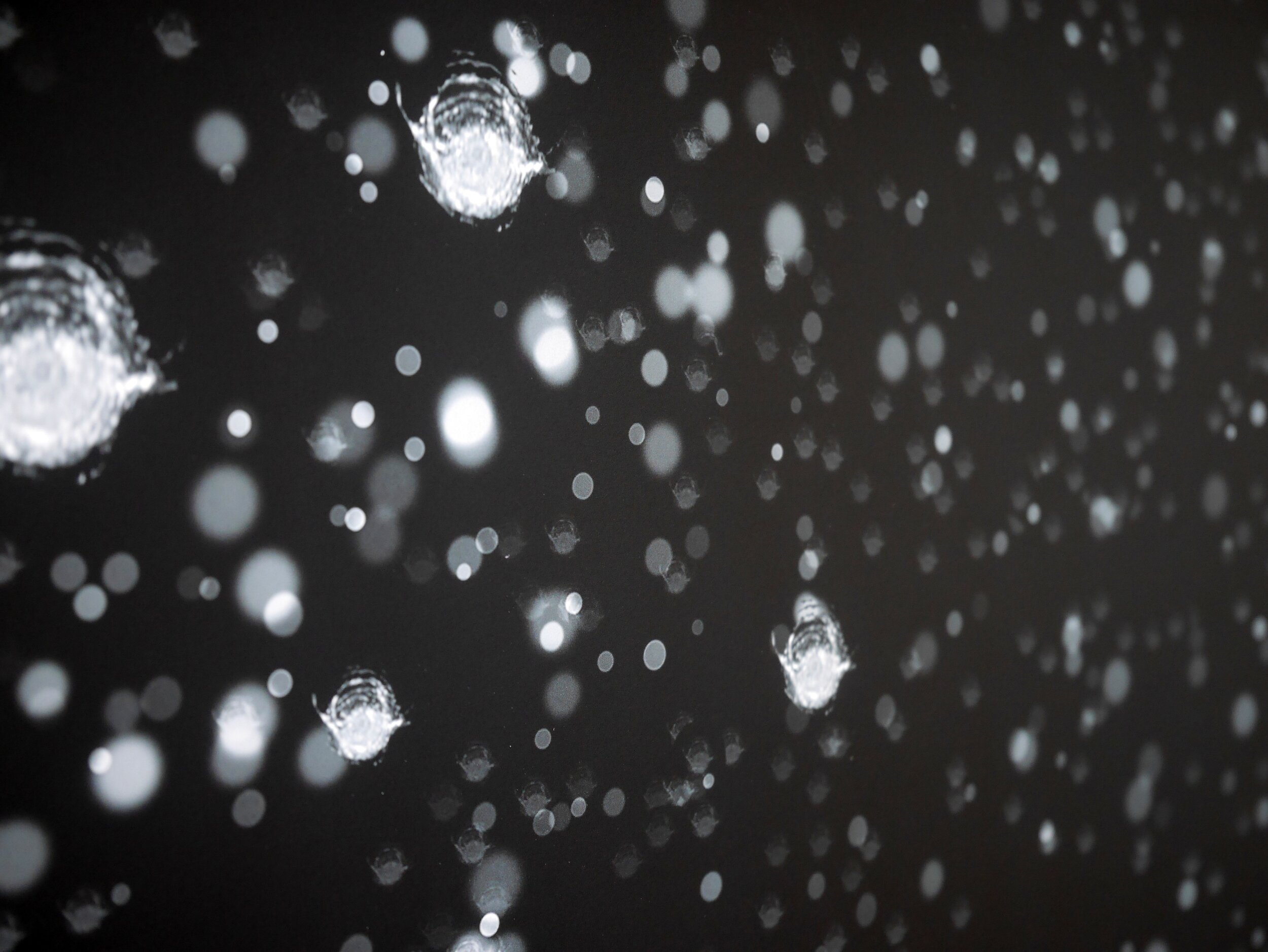
Armelle Tulunda
super/collider super/science x Turner Contemporary: Light Reflections
9 July
7PM BST
super/collider and Turner Contemporary Margate present “Light Reflections” with artist Armelle Tulunda and astronomer Paul Hill.
Get your free tickets here.
Armelle Tulunda will introduce her most recent project. While studying at École Nationale Supérieure d'Art et de Design de Nancy, she wrote her dissertation, Le sublime cosmique, on the significance of astronomical images in our ways to imagine, and connect to outer space. Armelle will discuss how writing this dissertation led her to create a new body of works using scientific imagery as raw material. Within her work, Armelle uses illusory objects, sound recordings from Voyager, environmental issues, natural and artificial light.
Following Armelle’s talk, Paul Hill will explain in detail about solstices and equinoxes, as well as the phases of the Moon and why we see them as we do. Paul will also explain about the sunset, discussing why we see the vibrant colours within the famous sunsets of Margate.
Paul Hill will tune in from his home town in Wiltshire, providing a live stream of the Sun from his telescope. During this event, we will discuss the celestial objects that we can see in the sky.
Armelle Tulunda is an artist who finds inspiration in astronomy, optics, scientific research and philosophy. Her practice includes works on paper, light installations, photography and video. She questions scientific images and the consequences of the evolution of technologies used in astronomical tools. Throughout her work, Armelle investigates our evolving relationship to the unknowable. Previous projects include exhibitions in Nancy (FR, 2020), London (UK, 2019) as well as a residency in Atina (IT, 2018).
Paul Hill is an elected fellow of the Royal Astronomical Society, co-presenter and writer of Awesome Astronomy podcast, a Space Ambassador for ESERO and has appeared on BBC News and Radio to discuss a range of astronomy and space issues.

Arts Territory Exchange: Sound Library
Pale Blue Dot Collectives’ sound piece Beneath the Moon’s Gaze has been selected for Arts Territory Exchange’s Sound Library.
MUCK (Must Use Critical Knowledge) and aTE have collaborated to bring together a number of textual prompts to instigate questions around the possibility of the Earth’s recovery, the inevitability of mans’ eventual demise, connectivity, hope and isolation. Artists from around the world were invited to provide accompanying sound works reflecting on their own territories, the fantasy of other places and the excitements and restrictions of proximity and distance, prior to and beyond time of Covid 19.
Follow the link on this page here to listen to our piece and the other selected works.
Beneath the Moon’s Gaze
Made in collaboration with John Hooper under our collective title, Pale Blue Dot Collective.
The geology of the Lake District has changed monumentally over the past 500 million years. The southern third of the Lake District is made up of rocks such as slate, siltstone and sandstone, which were formed at the bottom of tropical seas ~420 million years ago. The landscape of the Lake District has gone through periods of being dominated by volcanic activity, limestone, sandstones and the Ice Ages.
The abundance of nature in Grizedale Forest led me to think about the formation of life on Earth, which some scientists believe happened within tidal areas 4 billion years ago. At this time, the moon orbited much closer to Earth than it does now which caused huge tides to ebb and flow every few hours.
These tides caused variations in the salinity in coastal areas which may have driven the evolution of early DNA biomolecules. The sounds of the tide, captured on the current British coastline, were recorded in response to my stay in Grizedale. The recording has been slowed down to correspond to the time before Grizedale existed and the area which was to become the Lake District, was under tropical sea.
Bringing the sound of the sea back to Grizedale is an attempt to bring a cosmic perspective to viewing the landscape. Through the ever increasing loss of starlight and dark skies, we are losing our relationship with the universe, and forgetting our place within it. This piece is an attempt to bring focus to the long evolutionary journey of all the local flora and fauna, and the cosmic importance of each strand of life that exists on Earth, in contrast to the darkness of space.

super/collier SUPER/SCIENCE E6: KRISTINA PULEJKOVA/ FANTASIES OF EEL ECOLOGY
July 28
7PM BST
Join us for the sixth episode in our new online event series, super/science.
Buy tickets here.
Kristina Pulejkova will present her work Wedding Journey. This event is in association with Exposed Arts Projects.
Wedding Journey is a live video performance that uses dance, narration and cg animation, to look at the mysterious life cycle and migration of the critically endangered European eel. Told from the eels’ perspective, the project aims to cast a light on the story of this critically endangered animal whose existence is threatened by human action and climate change. Here, the eels are taken as a metaphor for the human strife for self-fulfilment, the seek for the utopian place and state.
Drawing parallels between the lives of humans and eels in the wake of climate change, the piece deals with the struggles of overcoming borders and barriers, in a world where long journeys and migrations are increasingly becoming more difficult.
The script for the work is informed by interviews with Dr. Matthew Gollock, ZSL (Zoological Society London), chair of the AESG (Anguillid Eel Specialist Group) and research from Dr. Zoran Spirkovski, Hydrobiological institute in Ohrid, North Macedonia on the European eel living in the Ohrid lake.
Direction and concept by Kristina Pulejkova, choreography by Georgia Tegou, music by Glen Johnson. Dancers: Amy Dakin Harris, Rebecca Namgauds, Vanessa Michielon, Michalis Theofanous and Antonia Ptohides. Voice actors: Alexandra Wilkinson, Marija Kaeva.
The project has been developed with support through the FLAMIN Fellowship Programme, Arts Council England, Fenton Arts Trust (R&D). The final piece production is supported by the Ministry of Culture, North Macedonia.
Kristina Pulejkova is a Macedonian London-based artist whose practice is informed by science and technology. She is currently artist in residence at Somerset House Studios, London.
Kristina’s work explores how the use of technology might lead to greater forms of sustainability in human-nature relationships. Working across moving image, sound and installation, she aims to build subjective narratives based on scientific data and principles.
In her work, she tends to imagine voices – voices from creatures, objects and even atoms in order to try to inhabit non-human perspectives. Through use of immersive technology, Kristina’s works often deal with environmental issues, telling personal stories that place audiences at the centre of the scene, allowing for a protagonist perspective and a different way of seeing.
Exposed Arts Projects is a think-and-do tank that celebrates the power of arts-based research* to produce an informed multidimensional perspective on the contemporary human condition. It is set to nurture an innovative, mindful and just society that is driven to explore the creative alternatives to the status quo.
This event will be accessed on the Zoom platform.

SUPER/COLLIDER SUPER/SCIENCE E4: CLAUDIA MIGNONE/ BEPICOLOMBO, COSMIC DISTANCES AND PERSPECTIVES
June 30
7:00PM BST
Join us for the fourth episode in our new online event series, super/science.
Buy tickets here.
In April, the space probe BepiColombo came to less than 13,000 km from Earth, steering its trajectory as part of a long journey towards Mercury, the ultimate destination of its scientific mission. During this gravity-assist flyby, the probe snapped black-and-white views of our planet, joining in the space-era tradition of picturing our cosmic home from space. This talk will take viewers on a journey from Earth through planets, stars and galaxies, and discuss the astronomical perspective on our home planet. The talk will also touch upon the BepiColombo mission, a European-Japanese collaboration to investigate Mercury's mysteries, and the science data gathered during the recent Earth flyby.
Claudia Mignone is an astrophysicist, science writer and communicator, originally from the south of Italy. After researching the expansion of the Universe for her PhD at the University of Heidelberg, she engaged full time in public outreach, covering various science communication roles as a contractor for the European Space Agency and working with space missions like Rosetta, Gaia, BepiColombo, and many others. Claudia is passionate about telling the stories of the great women and men that investigate the cosmos, and often collaborates with artists to research new approaches to scientific narration.
Ticket Cost: Pay as you feel donation, starting at £1.
This event will be accessed on the Zoom platform
The Earth Issue

Rising Moon 2
I have donated a special edition of my photograph titled Rising Moon 2 to The Earth Issue, which has put together an emergency print fundraiser in response to the current Black Lives Matter protests. 100% of proceeds after printing and shipping will be split amongst the organisations on Bail Funds: George Floyd and the 4 Front Project.
All initial US donations will be directed to Black Lives Matter via the Bails Funds platform. However, The Earth Issue will continuously monitor the landscape of organisations needing funds, adjusting to whom is donated to every 3 days based on needs and recommendations from frontliners in the civil rights struggle. Thank you to Elena Cremona for including my work. .


Freelands Foundation Emergency Grant
I am very glad to announce that I have been generously awarded a Freelands Foundation Emergency Grant which will help me to refocus my practice to have online and digital outputs. I am enormously thankful to the Freelands Foundation for this funding.

Lumen: Arts Council Emergency Response Fund
We are so pleased to have received a grant from the Arts Council’s Emergency Response Fund for Lumen. This funding will help us to keep Lumen open as a gallery when it is safe to do so, and enable us to do a series of online programming including creating a film. Thank you to The National Lottery players, DCMS UK and Arts Council England for this support!
A huge thanks to Elizabeth Jordan at Re : Future Collective and Kate @gasworkslondon Artist Grant Writing initiative, for their invaluable advice.
We look forward to sharing news soon about new activities this grant will fund!
super/collider super/science E3: Alice Morley/ Exploring Marine Wonders Around Thanet
09 June
7PM BST
Join us for the third episode in our new online event series, super/science.
Buy tickets here.
During this online event, you will learn about the ecology of the Margate Coastline, in association with Resortful and South East Creatives.
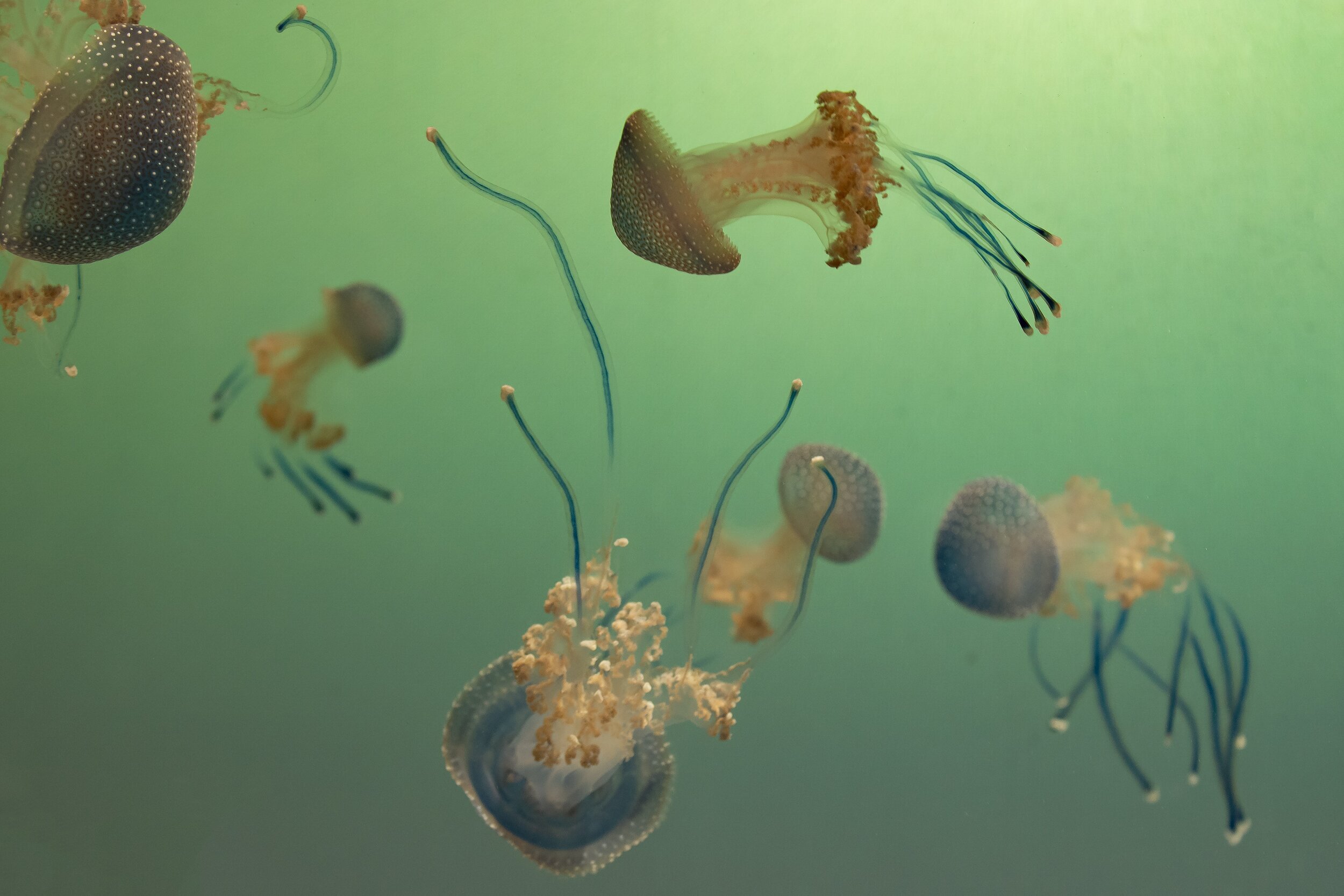
This talk with Alice Morley will allow people to learn more about the exciting variety of marine life we have around the Thanet Coast, which is often hidden beneath the waves! Here we will discuss some of the local species we can see on the shores across Kent, as well as the different habitats that species call home. This talk will also touch on the historic and cultural aspects of some offshore sites around the North Kent coast, and we will discuss the importance of marine conservation zones and how they can help to protect and preserve our fascinating marine environment for future generations. Following this talk, super/collider co-director Louise Beer and her partner John Hooper will observe marine objects under a microscope.
Alice Morley is a Marine Conservation Officer at Kent Wildlife Trust, with a background in Marine Environmental Management. After finishing her degree, Alice spent a couple of years living and working in Yorkshire before moving down to Kent. Her current role with Kent Wildlife Trust is varied and includes aspects such as commenting on marine and coastal planning proposals; campaigning for stronger marine protection and advocating for better management of marine conservation zones; providing environmental advice to offshore developers; delivering marine consultancy projects; and organising events such as shore surveys and invasive species control events working alongside volunteers and citizen scientists.
This event will be accessed on the Zoom platform.
Photo by Peter Neumann on Unsplash

Fringe Arts Bath/ Phantom Perspectives Curated by Jennifer McDonald
I am very pleased to have been included in Phantom Perspectives with John Hooper for Fringe Arts Bath, curated by Jennifer McDonald we are showing stills from our film Photon. You can walk around this amazing online exhibition through this link.
The festival runs from 22 May - 7 June.
Phantom Perspectives explores the relationship between art, science and technology by testing the boundaries of our perspectives. By considering the ocular capacities of the human eye, each artist seeks to tackle perception, whether it is focused on our bodies, our sight, or the walls of the gallery itself.
The multi-disciplinary approach will interrogate our perspectives of reality through an immersive environment. Life is often regimented, controlled and reasonable, bearing the imprint of a socially constructed perspective. Yet, Phantom Perspectives seeks to present the intangible through physical and virtual representations of a new reality that can be attained through the removal of influence.
Subverting the traditional viewing experience, the exhibition presents one that encourages participation and active engagement of the audience. Through this interrogation of perceived normality, we can question our increasingly mechanised society by utilising art to blur the rigid perspectives that can be imprinted on our reality.